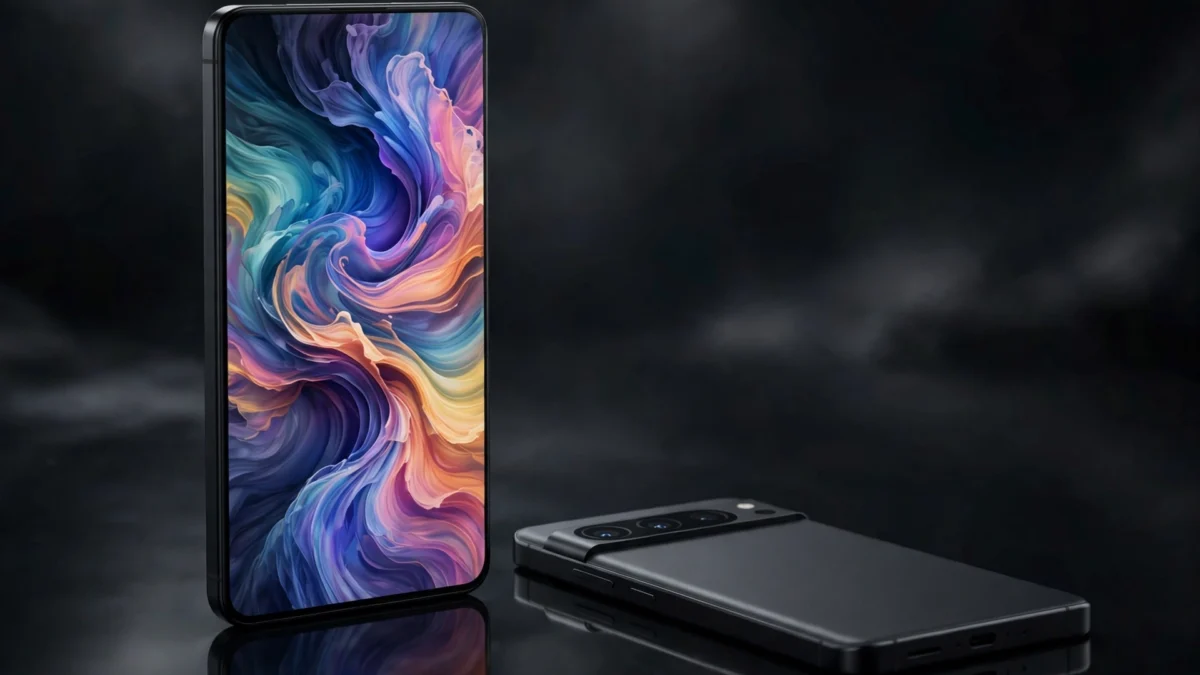

This Pixel 11 Pro XL review answers the one question that matters: is Google’s $1,299 flagship actually worth it, or should you skip it? The phone has been on shelves since 20 August 2026, and after two months of independent reviews, the verdict is clear — mostly. It’s Google’s best phone yet, but a $100 price rise and less RAM than last year make this a nuanced recommendation. One note on method: we haven’t hands-on tested the phone ourselves; this review is based on published reviews, benchmark data and official specifications available in October 2026.
Table of Contents
- Pixel 11 Pro XL Review: The Short Verdict
- Pixel 11 Pro XL Specs at a Glance
- Camera: Still the Reason to Buy a Pixel
- Display: One of the Brightest Screens You Can Buy
- AI and Software: Magic Capture Is the Star
- Battery and Charging: Smaller Battery, Better Efficiency
- Performance: Tensor G6 Is Fine — Until You Game
- HiLight: The Gimmick Nobody Asked For
- Price and Value: $1,299 Is a Lot to Ask
- Worth It or Skip It? The Final Verdict
- FAQ: Pixel 11 Pro XL Review
Pixel 11 Pro XL Review: The Short Verdict
Worth it if you’re coming from a Pixel 9 Pro XL or older, or switching to a premium Android flagship for the first time — the cameras, 3,600-nit display, genuinely useful AI features and seven years of updates make a compelling package.
Skip it if you own a Pixel 10 Pro XL (reviewers agree there’s not enough here to justify the upgrade), if you’re a serious mobile gamer (the Tensor G6 trails Snapdragon rivals), or if $1,299 makes you wince — a used flagship or one of the best budget phones under $300 covers the essentials for a fraction of the price.
Pixel 11 Pro XL Specs at a Glance
| Specification | Pixel 11 Pro XL |
|---|---|
| Display | 6.8″ LTPO OLED, 1344×2992, 1–120Hz, 3,600 nits peak, Gorilla Glass Victus 2 |
| Chipset | Google Tensor G6 (3nm) |
| RAM / Storage | 12GB / 256GB · 16GB / 512GB · 16GB / 1TB (no microSD) |
| Rear cameras | 50MP main (1/1.3″, f/1.7, OIS) + 48MP ultrawide + 48MP 5x periscope telephoto, up to 120x Pro Zoom |
| Front camera | 42MP ultrawide, autofocus |
| Video | 8K 24/30fps, 4K 60fps, 10-bit HDR |
| Battery | 5,115mAh · 45W wired · 25W Qi2.2 magnetic wireless (Pixelsnap) |
| Software | Android 17 — 7 years of OS, security and Pixel Drop updates |
| Build | IP68, 226g, 162.7 × 76.5 × 8.5mm, ultrasonic in-display fingerprint, face unlock |
| Extras | HiLight LED, Titan M3 chip, satellite SOS, Wi-Fi 7, Bluetooth 6.0, UWB |
| SIM | eSIM-only in the US (see our eSIM vs physical SIM guide) |
| Colours | Canyon, Olive, Fog, Obsidian |
| Price | From $1,299 / £1,279 · 256GB from $999 on some US deals (October 2026) |
Camera: Still the Reason to Buy a Pixel

No Pixel 11 Pro XL review would start anywhere else. The hardware is a 50MP main sensor paired with a 48MP ultrawide and a 48MP 5x periscope telephoto on a larger sensor than last year, with digital zoom stretching to 120x. The headline software trick is Magic Capture, which reviewers single out repeatedly: TechRadar calls it exceptional, and Android Central says it’s the main reason to buy.
9to5Google says it’s “the happiest” it’s been with a Pixel camera in ages. Instant Night Sight is considerably faster than before, and Google’s skin-tone accuracy and point-and-shoot reliability remain best in class. If photography is your priority, this is the phone’s strongest argument.
It’s not flawless. One hands-on review found extreme-zoom shots showing visible artefacts, and one lab-style tester noted the main and ultrawide lenses can clip highlights. For everyday shooting, though, the consensus is overwhelmingly positive: dependable rather than dazzling, and very hard to beat at this price.
Display: One of the Brightest Screens You Can Buy

The 6.8-inch Super Actua LTPO OLED is rated at 3,600 nits peak brightness; GSMArena measured 3,118 nits in its lab tests — either way, comfortably among the brightest phone displays sold in 2026. Reviewers agree it’s superb for outdoor use and streaming. The 1–120Hz adaptive refresh keeps scrolling silky without draining the battery at rest.
The trade-off is size: at 226g and 6.4 inches tall, this is a big, unwieldy phone. One-handed use is a stretch, literally. If you want the same internals in a smaller body, the regular Pixel 11 Pro keeps the camera system and AI in a 6.3-inch shell for $200 less.
AI and Software: Magic Capture Is the Star

Gemini is more deeply embedded in Android 17 than ever before. The new Rambler voice-to-text feature gets genuine praise, Magic Capture transforms photos after the fact, and features like Clear Calling, Call Screen and scam detection keep getting smarter. Buyers also get six months of Google AI Pro bundled with 5TB of cloud storage.
Two caveats. First, several of the most advanced Gemini features are US-only at launch — UK and European buyers get a cut-down experience for now. Second, Google’s seven-year update promise is the best in the business: a phone bought today gets OS and security updates into 2033. That long-term value is a real part of the buying equation.
Battery and Charging: Smaller Battery, Better Efficiency

On paper, the battery went backwards: 5,115mAh is smaller than the Pixel 10 Pro XL’s cell. In practice, reviewers found real-world endurance unchanged — all-day use with room to spare, helped by the more efficient Tensor G6. One review recorded a 15-hour-45-minute active-use score in GSMArena’s tests.
Charging is the sore spot. 45W wired charging sounds fine until you realise a full charge takes around 90 minutes, and reviewers call it “terribly slow” for 2026. No charger in the box, either — an increasingly annoying industry norm. If you’re moving from an older phone, our 12 tips to make your phone battery last longer still apply to flagships.
The bright spot is Pixelsnap: magnetic wireless charging up to 25W over Qi2.2, working with accessories without a magnetic case — something no big-name Android rival can do. Check the Pixel 11 Pro XL price on Amazon
Performance: Tensor G6 Is Fine — Until You Game
The Tensor G6, built on a 3nm process, is a big step forward for AI workloads and sails through everyday tasks — social, streaming, multitasking, heavy photo editing. But every review notes the same weakness: under sustained graphics load, it trails Snapdragon and Dimensity rivals, runs warmer than competitors, and hardcore gamers should look elsewhere. For 95% of buyers, this will never matter. For the other 5%, it’s a deal-breaker.
The RAM situation is the more annoying compromise. Every Pixel 10 Pro shipped with 16GB of RAM; this year the 256GB Pixel 11 Pro XL starts with 12GB, and you must step up to the 512GB model ($1,419) to get 16GB. Blame the global memory shortage — AI data centres are buying up DRAM supply — but you’re still paying $100 more for less RAM than last year’s base model.
HiLight: The Gimmick Nobody Asked For
The headline new hardware feature of the Pixel 11 series is HiLight, a new LED notification light. And reviewers hate it: 9to5Google calls it “a terrible product”, TechRadar sees no clear purpose for it, and Tech Advisor calls it “laughably useless”. It currently does so little that no reviewer has found a reason to recommend the phone because of it. Treat HiLight as a curio, not a feature — and certainly not a reason to upgrade.
Price and Value: $1,299 Is a Lot to Ask
Here’s the uncomfortable maths. The Pixel 11 Pro XL costs $100 more than the phone it replaces while shipping with 4GB less RAM in the base model. US street prices have already softened — an October 2026 snapshot showed the 256GB Fog model at $999 unlocked at Best Buy — so patient buyers shouldn’t pay full price. In India the phone starts at ₹1,34,999, where it faces fierce competition from similarly priced flagships.
Context matters: 2026 is the year flagship prices climbed across the board as memory costs soared — we saw the same story with the OPPO Find X10’s launch pricing. Google isn’t alone. But the Pixel 11 Pro XL is the most expensive non-folding Pixel ever made, and at that price, the compromises feel harder to excuse.
Worth It or Skip It? The Final Verdict
Buy it if: you’re upgrading from a Pixel 9 Pro XL or older (the jump is easy to justify); you want the best point-and-shoot camera on Android; you live inside the Google ecosystem; or you value seven years of updates and genuinely useful AI over raw gaming performance.
Skip it if: you own a Pixel 10 Pro XL — even the friendliest Pixel 11 Pro XL review we read says to keep your money; you’re a serious mobile gamer; you hate big phones; or your budget is tight, in which case a quality budget phone under $300 handles daily life surprisingly well while you wait for prices to drop.
Our Pixel 11 Pro XL review score lands at a solid 8.3/10 territory — a familiar formula made better, as one reviewer put it. Google’s best phone yet, but not a must-buy upgrade for everyone. Check the current Pixel 11 Pro XL price on Amazon
FAQ: Pixel 11 Pro XL Review
When was the Pixel 11 Pro XL released?
Google announced the Pixel 11 series on 12 August 2026, and the Pixel 11 Pro XL went on sale on 20 August 2026.
How much does the Pixel 11 Pro XL cost?
Official pricing starts at $1,299 (256GB/12GB), $1,419 (512GB/16GB) and $1,649 (1TB/16GB) in the US, from £1,279 in the UK, and ₹1,34,999 in India (prices as of October 2026; street prices are already lower at some US retailers).
Is the Pixel 11 Pro XL worth it over the Pixel 10 Pro XL?
Probably not. Reviewers agree the upgrades — Magic Capture, a brighter display, Tensor G6 — are real but incremental, while you pay $100 more and get less base RAM. Wait for a discount or skip a generation.
Is the Pixel 11 Pro XL good for gaming?
No — that’s its biggest weakness. The Tensor G6 handles everyday tasks well but can’t match Snapdragon or Dimensity rivals under sustained graphics load, and it runs warm. Serious mobile gamers should buy elsewhere.
Does the Pixel 11 Pro XL have a physical SIM slot?
Not in the US — the Pixel 11, 11 Pro and 11 Pro XL are eSIM-only there. International models support nano-SIM plus eSIM. See our eSIM vs physical SIM travel guide for how eSIM-only phones work abroad.
What is HiLight on the Pixel 11?
HiLight is a new LED notification light on the Pixel 11 series. Reviewers have been harsh — 9to5Google calls it “a terrible product” and TechRadar sees no clear purpose for it. Don’t buy the phone for this feature.