Finding the best budget graphics card under $300 in 2026 is harder than it ought to be. AI demand has pushed GPU and memory prices up across the board, and cards that launched at $299 are regularly selling above their launch prices. That said, this is still the most competitive segment in PC gaming: you can get genuine 1080p gaming at high settings with smooth frame rates without breaking the bank.
Two honest notes: we have not hands-on tested these cards — picks are based on published reviews and specifications available in October 2026 — and all prices are approximate as of October 2026. Street prices move weekly, so check the live listing before you buy; where a card has drifted over $300, we say so.
Table of Contents
- What $300 Gets You in the 2026 GPU Market
- The Best Budget Graphics Card Under $300 in 2026: Our 7 Picks
- Budget Graphics Cards Compared: Specs at a Glance
- How to Choose a Budget Graphics Card
- FAQ: Budget Graphics Cards Under $300
- The Bottom Line
What $300 Gets You in the 2026 GPU Market
A $300 budget in 2026 buys a solid 1080p gaming card: every card here handles esports at 200+ FPS and modern AAA games at high settings with 60+ FPS, some stretching into 1440p via upscaling. Upgrading from a GTX 1060 or RX 580? Any of these will feel like a generational leap.
The market reality is messy, though: remaining last-generation stock is thin and often costs more than current-generation alternatives — a trend reported across multiple review outlets this October. That flips old buying advice on its head: when hunting for the best budget graphics card under $300, buying current-generation matters more than ever, because last-gen leftovers have largely dried up at their old prices.
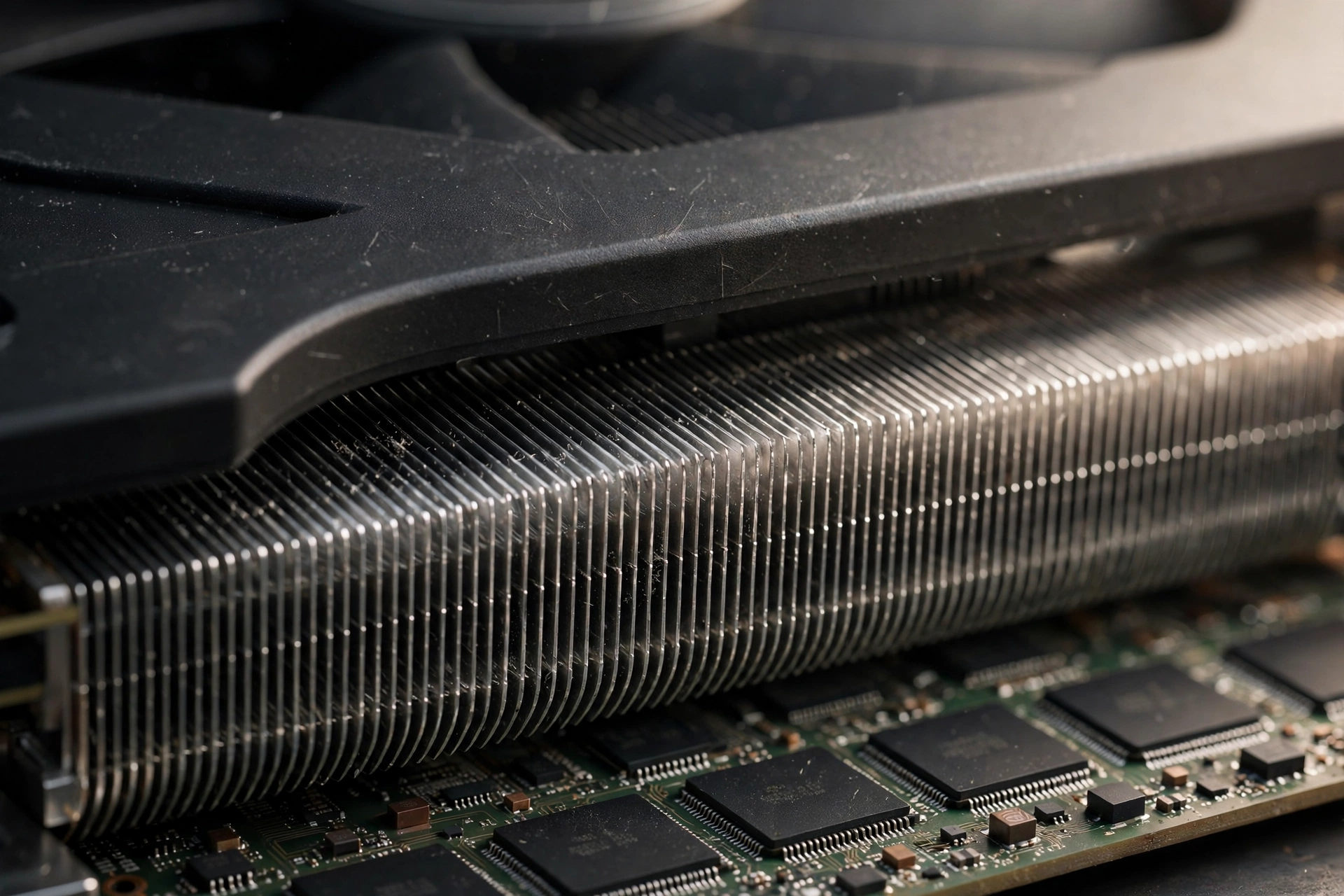
VRAM is the single biggest decision here. Games increasingly want 8GB or more, and the standout feature of 2026’s budget cards is that two of the strongest picks — the Intel Arc B580 (12GB) and Arc B570 (10GB) — give you more memory than their NVIDIA and AMD rivals at similar prices. If you keep your graphics cards for three or four years, that headroom arguably matters more than a 10–15% frame-rate lead today.
One more thing: enable Resizable BAR if you buy an Intel Arc card — it is effectively required for full performance, so check your BIOS before the card arrives. Also confirm your power supply has the wattage and a spare 8-pin PCIe connector.
The Best Budget Graphics Card Under $300 in 2026: Our 7 Picks
Our picks for the best budget graphics card under $300, ranked from best overall value to best used-market bargain. Every card plays modern games well at 1080p; the differences come down to VRAM, efficiency, and software.
1. Intel Arc B580 12GB — Best Overall Budget Graphics Card Under $300 (approx. $250–$330)
The Arc B580 remains the smartest buy in the budget bracket. Launched at $249 with 12GB of GDDR6 on a 192-bit bus, it delivers roughly RTX 4060-class 1080p performance with 50% more VRAM than its 8GB rivals, and Intel’s XeSS 2 upscaling is genuinely good. It needs Resizable BAR enabled, draws up to 190W (plan a 600W+ PSU), and street prices have drifted above the $249 launch price at many retailers. For a second opinion, see this independent Arc B580 vs RTX 5060 comparison.
Best for: gamers who want the most VRAM and the best value in 2026.
Check price on Amazon
2. NVIDIA GeForce RTX 5060 8GB — Best NVIDIA Budget Graphics Card Under $300 (approx. $299–$350)
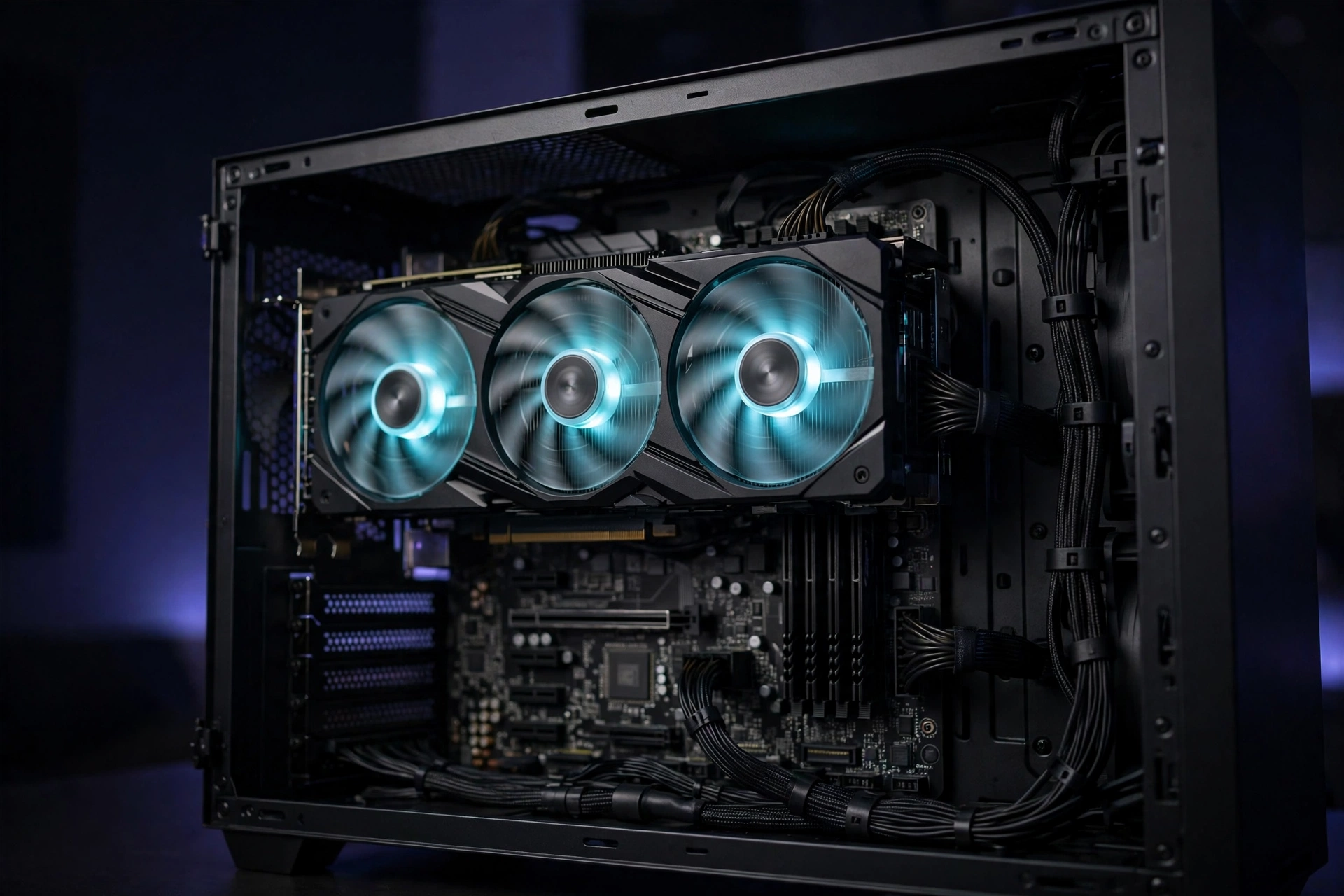
The RTX 5060 launched in May 2025 at $299: NVIDIA’s most affordable Blackwell card, with 3,840 CUDA cores, 8GB of fast GDDR7 memory, and a miserly 145W power draw. It is roughly 20–25% faster than the RTX 4060 it replaced, and DLSS 4 with Multi Frame Generation is the trump card — it transforms 1440p gaming on what would otherwise be a strictly 1080p card. The 8GB buffer can max out in demanding titles at ultra settings, and street prices have drifted above $299 this autumn. Buy it for DLSS, NVENC streaming, or CUDA; otherwise compare against the Arc B580.
Best for: NVIDIA loyalists, streamers (excellent AV1 encoder), and anyone invested in the DLSS ecosystem.
Check price on Amazon
3. AMD Radeon RX 9060 XT 8GB — Best AMD Budget Graphics Card Under $300 (approx. $300–$390)
AMD’s RDNA 4 mainstream card launched in June 2025 at $299 for the 8GB model: 2,048 stream processors, a 3,130 MHz boost clock, and 320 GB/s of bandwidth. It trades blows with the RTX 5060 in traditional rasterisation, and FSR 4 is a real step up from FSR 3. The catch is the price: recent reviews show street prices climbing past the $299 launch price in late 2026, and above $330 the Arc B580’s extra 4GB of VRAM looks tempting. Read this independent RX 9060 XT 8GB review for measured benchmark data.
Best for: AMD fans who want strong raster performance and FSR 4 at 1080p, ideally at launch price.
Check price on Amazon
4. Intel Arc B570 10GB — Best Ultra-Budget Graphics Card (approx. $220–$250)
The B570 is the B580’s little sibling: about 10–15% slower, with 10GB of GDDR6 VRAM at a $219 launch price — the cheapest way in 2026 to get a double-digit frame buffer in a new card. The same Arc caveats apply: Resizable BAR is required, and drivers are good but not NVIDIA-bulletproof.
Best for: absolute tight-budget 1080p gaming where every dollar counts.
Check price on Amazon
5. AMD Radeon RX 7600 8GB — Best Last-Gen Value (approx. $250–$280)
Last generation’s budget champion refuses to die: the RX 7600 still pushes 90–100 FPS at 1080p high in most AAA games and sails past 200 FPS in esports titles, with street prices around $250–280. It lacks FSR 4 (stuck on FSR 3.1) and ray tracing is weak, but for pure rasterised 1080p gaming it remains excellent value. If your rig feels sluggish for other reasons, try our speed-up guide before assuming the GPU is the bottleneck.
Best for: esports players and buyers who want proven 1080p performance at the lowest street price.
Check price on Amazon
6. NVIDIA GeForce RTX 5050 8GB — Most Efficient Budget Pick (approx. $249 MSRP)
The desktop RTX 5050 launched at $249 with 8GB of GDDR7 and just 2,560 CUDA cores — the smallest Blackwell card. Its party trick is efficiency: around 130W, cool, quiet, and happy in small-form-factor builds. You get DLSS 4, frame generation, and NVIDIA’s excellent encoder.
It sits clearly behind the RTX 5060 — about 35% slower in independent comparisons — and at current inflated street prices it often costs nearly as much, which destroys its value. Only buy the 5050 near its $249 launch price; above $290, step up to the 5060 or sideways to an Arc B580. If portability tempts you more than a desktop build, our gaming handheld roundup covers the other end of budget gaming.
Best for: small-form-factor builds and ultra-efficient 1080p gaming, bought near launch price.
Check price on Amazon
7. NVIDIA GeForce RTX 3060 12GB — Best Used-Market 12GB Deal (approx. $200–$280 used)
The old warhorse. The RTX 3060 12GB launched back in 2021, but it remains the cheapest route to 12GB of VRAM and full CUDA support — still recommended by AI-focused outlets in 2026 for budget local LLM work precisely because of that memory. Used examples change hands for $200–280.
Buy used only from sellers with return policies, stress-test on arrival, and check fan bearings — the crypto-mining era flooded the market with hard-worked cards. At new-stock prices anywhere near $300+, it makes no sense against the Arc B580 or RTX 5060. On the laptop side, our piece on whether RTX laptops are worth it covers the mobile end of this value argument.
Best for: bargain hunters comfortable with the used market who want 12GB and CUDA for the least money.
Check price on Amazon
Budget Graphics Cards Compared: Specs at a Glance
| Card | VRAM | Power (TDP) | Upscaling | Approx. price (Oct 2026) | Why buy it |
|---|---|---|---|---|---|
| Intel Arc B580 | 12GB GDDR6 | 190W | XeSS 2 | $250–$330 | Best overall: 12GB at a budget price |
| RTX 5060 | 8GB GDDR7 | 145W | DLSS 4 | $299–$350 | Best NVIDIA: DLSS 4, NVENC, efficiency |
| RX 9060 XT 8GB | 8GB GDDR6 | 150W | FSR 4 | $300–$390 | Best AMD: strong raster, FSR 4 |
| Intel Arc B570 | 10GB GDDR6 | 150W | XeSS 2 | $220–$250 | Cheapest way to 10GB |
| RX 7600 | 8GB GDDR6 | 165W | FSR 3.1 | $250–$280 | Proven 1080p value |
| RTX 5050 | 8GB GDDR7 | ~130W | DLSS 4 | ~$249 MSRP | Most efficient, small builds |
| RTX 3060 12GB (used) | 12GB GDDR6 | 170W | DLSS | $200–$280 used | 12GB + CUDA, cheapest |
How to Choose the Best Budget Graphics Card Under $300
Once you have shortlisted a couple of contenders for the best budget graphics card under $300, these five factors will settle the decision.
Prioritise VRAM for longevity. In 2026, 8GB is the minimum for comfortable 1080p gaming and 10–12GB is the sweet spot if you keep cards for years — the single reason the Arc B580 leads this list.
Match the card to your power supply. A quality 550W unit handles the RTX 5060 and RX 9060 XT; the 190W Arc B580 deserves 600W or more. Check for a spare 8-pin PCIe connector before ordering.

Pick your upscaler wisely. DLSS 4 (NVIDIA), FSR 4 (AMD RDNA 4) and XeSS 2 (Intel) all meaningfully extend a budget card’s life — a $280 card with good upscaling plays like a $400 card without it. The old RX 7600 is stuck on FSR 3.1, and that is part of its discount.
Know the driver landscape. NVIDIA’s drivers are the most trouble-free, AMD’s are solid, and Intel’s are much improved but still the most variable between games. If you mainly play one or two titles, check Arc-specific benchmarks for those games first.
Don’t overspend on the last generation. The RTX 4060 — the 2023–2024 budget king — now lists above $400 in most places, more than its faster successor. Always compare against current-generation prices before buying anything last-gen. If a whole new build is on the cards, our budget laptop roundup shows what complete systems cost at the same budget.
FAQ: Budget Graphics Cards Under $300
What is the best budget graphics card under $300 in 2026?
For most buyers, the Intel Arc B580 12GB — the most VRAM near this price, RTX 4060-class 1080p performance, and good XeSS 2 upscaling. NVIDIA buyers should get the RTX 5060 for DLSS 4 and streaming; AMD buyers should look at the RX 9060 XT 8GB.
Is 8GB of VRAM enough in 2026?
For 1080p gaming at high settings, yes — with upscaling and sensible texture settings. It is getting tight in some recent AAA titles, though, which is why the 10GB+ cards on this list are worth a premium if you keep your GPU for several years.
Do I need to upgrade my power supply for a budget GPU?
Probably not: most cards here need 130–190W and run on a quality 550–600W PSU with one 8-pin PCIe connector. The 145W RTX 5060 is the most forgiving upgrade for older systems.
Should I buy a used graphics card to save money?
It can work — a used RTX 3060 12GB around $200–280 is a genuine bargain — but buy from sellers with return policies and stress-test immediately. For a first build, a new card with a full warranty is usually worth the extra.
The Bottom Line
The best budget graphics card under $300 in 2026 is the Intel Arc B580 12GB for most people: 12GB of VRAM, strong 1080p performance, and the best value in a market where every rival gives you 8GB. NVIDIA devotees should pick the RTX 5060 for DLSS 4 and the best encoder in the business, while the Arc B570 rules the absolute bottom of the budget. Buy at a sane price, enable Resizable BAR on Intel cards, and enjoy your new card.