
Update: NVIDIA RTX Spark laptops are on sale from today, 16 October 2026. Prices start at $2,599.99 for the Microsoft Surface Laptop Ultra, with models from ASUS, HP, Lenovo, Dell and MSI launching alongside it. This is the biggest shake-up in the Windows laptop market in years — NVIDIA’s first-ever PC chip, promising up to 1 petaflop of AI performance and up to 128GB of unified memory in a thin-and-light machine. The question every buyer is asking: are RTX Spark laptops actually worth $2,600 and up?
- What Are RTX Spark Laptops?
- RTX Spark Laptops on Sale Today: Models and Prices
- The RTX Spark Chip: Blackwell, Grace and 1 Petaflop of AI
- Local AI: Why These Laptops Could Change How You Use AI
- Who Should Buy One — and Who Should Wait
- The Catches: Compatibility, Battery and First-Generation Risks
- RTX Spark Laptops vs the Alternatives
- Verdict: Are RTX Spark Laptops Worth $2,600?
- Frequently Asked Questions
What Are RTX Spark Laptops?
RTX Spark laptops are a new class of Windows PC built around NVIDIA’s first-ever PC processor: the RTX Spark superchip, combining a Blackwell RTX GPU, a 20-core NVIDIA Grace CPU (co-developed with MediaTek) and up to 128GB of unified memory in one package. They are the first NVIDIA-powered laptops, and the first serious Windows rival to Apple’s unified-memory Macs.
NVIDIA CEO Jensen Huang introduced RTX Spark at Computex back in May, but it was Microsoft’s 7 October event that gave the platform prices, configurations and a confirmed 16 October sale date. Pre-orders opened on 7 October, and the first machines ship and hit retail shelves from 16 October 2026. If you are tracking laptop prices this year, our buy-now-or-wait guide for 2026 explains why this launch reshuffles the calendar for every premium Windows machine.
RTX Spark Laptops on Sale Today: Models and Prices
Six brands are shipping RTX Spark laptops from day one — Microsoft, ASUS, HP, Lenovo, Dell and MSI — with Acer and GIGABYTE models expected to follow later. Here is every launch model, its starting price and who it suits best:
| Model | Starting price | Key spec | Best for |
|---|---|---|---|
| Microsoft Surface Laptop Ultra | $2,599.99 | 18-core CPU, 5,120-core GPU, 24GB / 512GB; up to 128GB and $5,899.99 | Flagship all-rounder; first Surface on RTX Spark |
| ASUS ProArt P14 | $2,599.99 | 14-inch creator laptop, up to 1 petaflop AI compute | Creators who travel light |
| ASUS ProArt P16 | $2,799.99 | 16-inch Lumina OLED; 128GB config reaches $6,999.99 | Creators wanting the biggest canvas |
| HP OmniBook X 14 | $2,999.99 | 18-core N1X, 32GB unified memory, 1TB SSD | Portability with serious memory |
| HP OmniBook Ultra 16 | $3,199.99 | 16-inch, up to 128GB unified memory | Max memory in the HP line |
| Lenovo Yoga 9n | $3,099.99 | Yoga-class build, up to 128GB | Business and stylus users |
| Dell XPS 16 | $3,799.99 | 3.2K tandem OLED display | Premium display enthusiasts |
| MSI Prestige N16 Flip AI+ | Pre-order (price TBC) | 16-inch 2-in-1 with Nano Pen | Convertible flexibility |
The Microsoft Surface Laptop Ultra is the headline act: the first Surface ever built on an NVIDIA chip. The $2,599.99 entry model packs an 18-core CPU, a 5,120-core Blackwell GPU, 24GB of unified memory and a 512GB SSD; the fully loaded version (20-core CPU, 6,144-core GPU, 128GB memory, 1TB storage) climbs to $5,899.99 — the full price and spec breakdown lists every configuration. Its 15-inch mini-LED touchscreen is claimed to hit 2,000 nits of peak HDR brightness, and Microsoft has brought back the ports crowd — HDMI, USB-A, an SD card reader and a 3.5mm jack, plus a new magnetic USB-C charging port. If you are tempted by a convertible instead, our 10 best 2-in-1 laptops of 2026 covers the wider market while we wait for full reviews of the MSI Flip.
The ASUS ProArt P14 matches Microsoft’s $2,599.99 entry price, while the P16 tops out at $6,999.99 with 128GB — the most expensive configuration announced so far.
Where to buy: models are being sold through the makers’ own stores and major retailers — Amazon, Best Buy and the ASUS eShop among them.
- Check price: Microsoft Surface Laptop Ultra on Amazon
- Check price: ASUS ProArt P16 on Amazon
- Check price: HP OmniBook Ultra 16 on Amazon
- Check price: Dell XPS 16 on Amazon
Prices shown are the manufacturers’ US launch prices as of October 2026. Prices and configurations vary by region and retailer, and may change. Always check the current price before buying.
The RTX Spark Chip: Blackwell, Grace and 1 Petaflop of AI
Understanding what is inside these machines explains both the excitement and the price tag. The RTX Spark superchip fuses three ingredients:
- Blackwell RTX GPU — up to 6,144 CUDA cores with 5th-generation Tensor Cores (FP4 precision), the same architecture as NVIDIA’s latest desktop graphics cards.
- 20-core NVIDIA Grace CPU — an Arm-based processor co-developed with MediaTek, tuned for power efficiency.
- Up to 128GB of unified LPDDR5X memory — one big memory pool shared by the CPU and GPU, instead of separate RAM and VRAM.
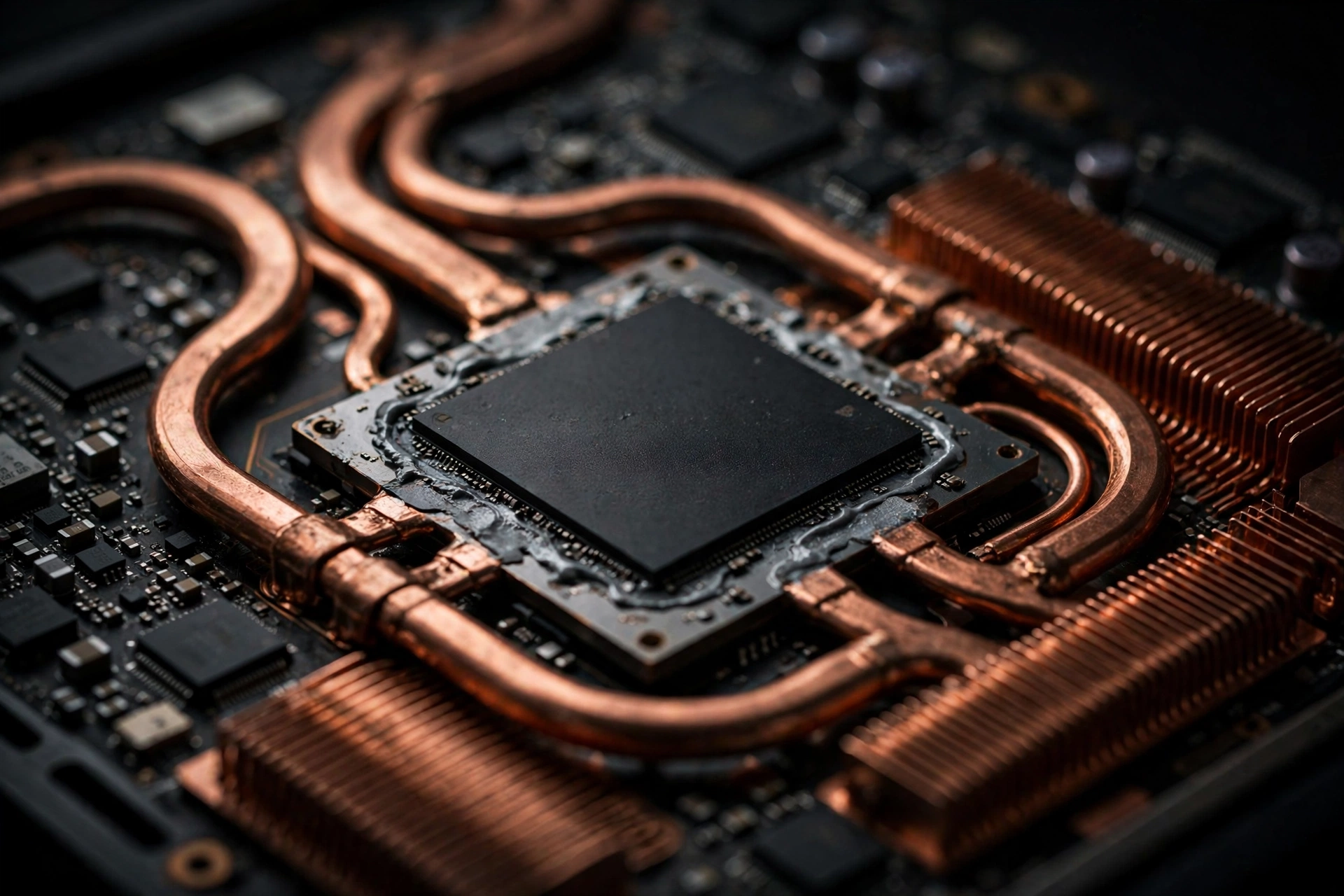
That unified pool is the whole pitch. NVIDIA says it enables up to 1 petaflop of FP4 AI compute and lets the laptops run models of up to 120 billion parameters locally — no cloud, no subscription. For video creators, NVIDIA claims 8K 4:2:2 editing unplugged and 3D renders above 90GB; for gamers, AAA titles at 1440p over 100fps with DLSS 5, Reflex and G-SYNC. Treat that gaming figure as NVIDIA’s own marketing claim for now — it almost certainly leans on DLSS frame generation, and no independent outlet has published standardised benchmarks of RTX Spark laptops yet. We will update this article as third-party reviews land.
Local AI: Why These Laptops Could Change How You Use AI
The hardware is only half the story. NVIDIA and Microsoft timed a software push to match: on 15 October, NVIDIA released Nemotron 3.5 Bolt 74B — a 74-billion-parameter model that fits inside 24GB of memory, so even the base $2,599.99 Surface can run it locally. Also launched: PAIR, an open-source inference router; Broadcast 2.3 with an MCP server; and a first PyTorch-CUDA build for Windows on Arm, with Adobe shipping beta versions of Photoshop and Premiere with native RTX Spark support.

In plain terms: these are the first Windows laptops designed so you can run serious AI agents and models on the machine itself, privately and offline. Microsoft’s bet is that meaningful AI work — coding agents, local model experiments, complex projects — can move off expensive cloud data centres and onto hardware you own. That is the story Apple has told for years with unified-memory Macs, and now Windows finally has a rival. If you want to try AI tools without spending $2,600 first, start with our roundup of the best free AI tools of 2026 — then decide whether local horsepower is worth paying for. And for the cutting edge of cloud models, read our explainer on Google Gemini 4 Argon.
Who Should Buy One — and Who Should Wait

Buy an RTX Spark laptop if you are:
- An AI developer or researcher who wants to prototype with 70B+ parameter models locally. The 128GB configurations are purpose-built for you.
- A video creator editing 4K/8K timelines who likes the idea of hardware-accelerated AV1, 4:2:2 encode/decode and DLSS-accelerated rendering.
- Privacy-conscious and want capable AI without sending everything to the cloud.
- An early adopter comfortable paying first-generation prices for a genuinely new platform.
Wait if you are:
- A mainstream buyer — nothing about email, Office and Netflix needs 1 petaflop. A quality mid-range machine, like the picks in our best Chromebooks of 2026, does that job for a fraction of the price.
- A gamer on a budget — $2,600 buys a very serious gaming desktop or a high-end gaming laptop with proven benchmarks, which RTX Spark still lacks.
- Software-dependent on niche Windows apps — see the compatibility catch below.
The Catches: Compatibility, Battery and First-Generation Risks
No launch-day buyer guide is honest without the caveats. Three stand out:
1. Windows on Arm compatibility is still a question mark
RTX Spark is an Arm-based platform, so older x86 software runs through emulation. Day-one support looks better than previous Windows-on-Arm efforts — a first PyTorch-CUDA build for Windows on Arm with claimed support for 97% of the top 15,000 Python packages, plus native Python and Conda installers — but “claimed” is the operative word until reviewers verify it. Check that your must-have apps run natively before ordering.
2. Battery life is unproven
NVIDIA promises thin chassis (as slim as 14mm, as light as 3 pounds on some models) with all-day battery life, thanks to the MediaTek co-designed CPU’s efficiency. But one company’s 15-hour-typical-use claim will not survive hammering the GPU, and independent battery testing does not exist yet.
3. First-generation pricing is steep
Analysts at Morgan Stanley had estimated top configurations around $2,899; the actual 128GB machines run $4,500 to $7,000. Early adopters always pay the novelty tax — and with Acer and GIGABYTE models still to come, competition (and possibly prices) will shift within months.
RTX Spark Laptops vs the Alternatives
Before you commit $2,600+, consider what else the money buys:
- MacBook Pro with Apple silicon — the incumbent local-AI laptop. Unified memory, proven software ecosystem, mature reviews. If your workflow is already Mac-shaped, RTX Spark is not yet a reason to switch.
- High-end x86 Windows laptops — Intel/AMD machines with discrete NVIDIA GPUs offer proven compatibility and often better value for gaming.
- A desktop workstation — $2,600–$3,000 buys a desktop that will outperform any thin laptop on sustained workloads, if you do not need portability.
Where RTX Spark laptops genuinely stand apart is the combination of Windows, CUDA and local-AI memory headroom in a portable machine. Nobody else sells that today.
Verdict: Are RTX Spark Laptops Worth $2,600?
RTX Spark laptops are the most interesting Windows launch in years — but “interesting” is not the same as “worth buying today”. If you run local AI models, edit heavy video, or want the first genuinely new Windows PC platform in a decade, the $2,599.99 entry price buys you into something real: up to 128GB of unified memory and NVIDIA’s full AI stack in a laptop you can carry. For that niche, yes — worth it, with the usual early-adopter caveats.
For everyone else, the honest answer is to wait. Independent benchmarks, battery tests and compatibility reports do not exist yet; NVIDIA’s numbers are company claims, not verified results; and first-generation prices will look expensive by next year. Watch the reviews, check your software, and revisit in a few months. We will keep this guide updated as real-world testing lands.
Frequently Asked Questions
How much do RTX Spark laptops cost?
RTX Spark laptops start at $2,599.99 for the Surface Laptop Ultra and ASUS ProArt P14. Prices climb with memory: HP’s models run $2,999.99–$3,199.99, Lenovo’s Yoga 9n starts at $3,099.99, Dell’s XPS 16 at $3,799.99, and 128GB configurations reach $5,899.99–$6,999.99.
When did RTX Spark laptops go on sale?
Models from Microsoft, ASUS, HP, Lenovo, Dell and MSI are available from day one.
Can RTX Spark laptops run AI models locally?
Yes — that is their main selling point. NVIDIA says the platform runs models up to 120 billion parameters locally, and the newly released Nemotron 3.5 Bolt 74B fits in 24GB of memory, so even base configurations can run serious models offline. The 128GB configurations handle the largest workloads.
Are RTX Spark laptops good for gaming?
NVIDIA claims AAA games run at 1440p over 100fps with DLSS 5, Reflex and G-SYNC — but that is the company’s own marketing figure, not an independent benchmark. No third-party benchmarks exist yet, so gamers should wait for reviews before buying on that basis.
Do RTX Spark laptops run Windows?
Yes, they run Windows 11 on Arm. NVIDIA and Microsoft launched day-one support including a first PyTorch-CUDA build for Windows on Arm, native Python and Conda installers, and beta native versions of Adobe Photoshop and Premiere. Older x86 apps run via emulation — check your must-have software first.


