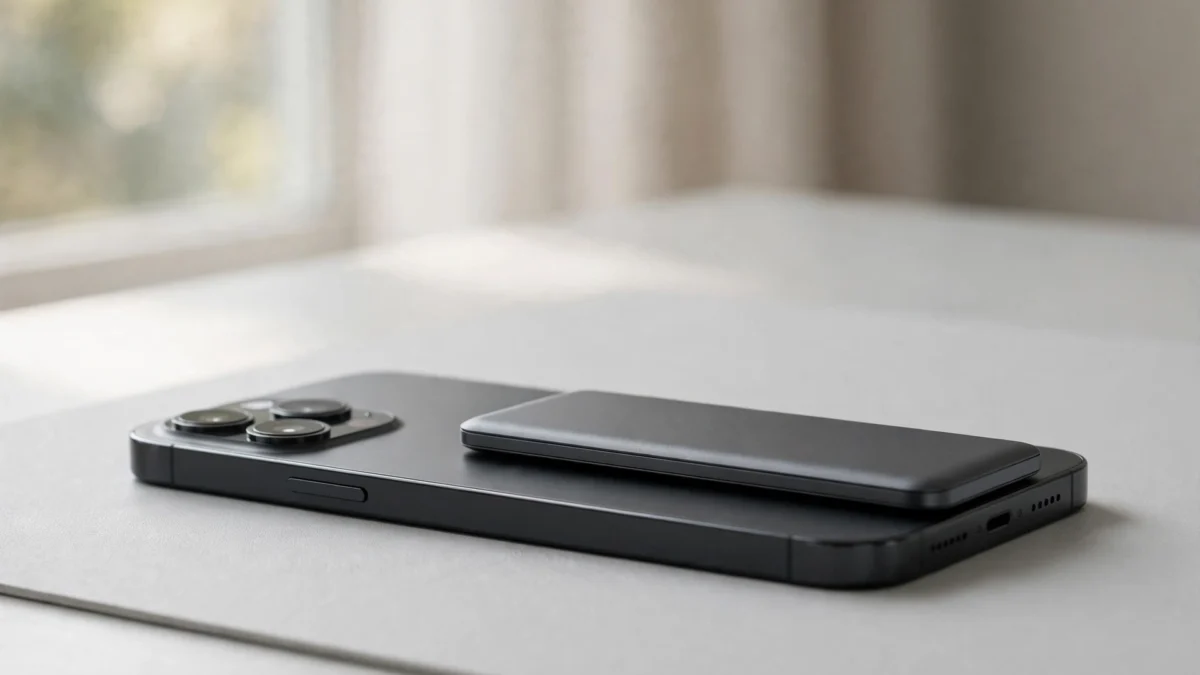
A semi solid state power bank is the first genuinely new thing to happen to portable charging in years. Instead of the conventional lithium-ion cells inside every power bank you have ever owned, these new models use semi-solid-state cells — a halfway step towards fully solid-state batteries that adds a gel-like layer to the liquid electrolyte. The payoff is tangible: less risk of swelling and fire, far more charge cycles, and designs thin enough to sit flush against the back of your phone.
Belkin kicked the trend off at IFA 2026 in Berlin with its BoostSolid range, Singapore’s BMX (Better Mobile Xperience) followed with its SolidSafe line, and Japan’s Elecom joined in with a 10,000mAh model engineered for a very long life. Below, we explain what semi-solid-state actually means, then round up the five semi solid state power bank picks worth knowing about in 2026.
Contents
- What is a semi solid state power bank?
- Why semi-solid-state matters: safety, lifespan, thinness
- The 5 best semi solid state power banks for 2026
- How to choose a semi solid state power bank
- Semi solid state power bank FAQ
- The bottom line
What is a semi solid state power bank?
Every power bank on the market today — including the conventional models in our best power banks 2026 roundup — is built on lithium-ion chemistry with a liquid electrolyte inside each cell. That liquid is the weak link: it is flammable, it degrades with every charge cycle, and it is a big part of why old power banks swell up like pillows after a couple of years in a drawer.
Semi-solid-state cells keep the lithium-ion foundation but add a gel-like layer to the electrolyte, partway replacing the liquid. The result sits between conventional lithium-ion and fully solid-state batteries: the gel layer is more stable, which lowers the risk of swelling and thermal runaway, and the chemistry tolerates far more charge–discharge cycles before capacity starts to fade.
Fully solid-state batteries — where the liquid electrolyte is replaced entirely — remain the industry’s endgame, but they are still largely a lab and prototype story. Semi-solid-state is what is actually shipping now, which is why it is suddenly appearing in products you can buy. Belkin’s IFA 2026 launch was covered in detail by Notebookcheck and Engadget, and more brands are expected to follow through 2027.

Why semi-solid-state matters: safety, lifespan, thinness
Three things make the new cells worth paying attention to:
1. Safety. The gel-like electrolyte layer is inherently more stable than a purely liquid one, which reduces the risk of swelling and fire — the two failure modes that make cheap power banks genuinely unpleasant to own. No battery is risk-free, but this is a meaningful step in the right direction.
2. Lifespan. This is the headline number. Elecom rates its semi-solid-state 10,000mAh model at roughly 2,000 charge cycles under JIS C 8711 testing — about four times the lifespan of a standard lithium-ion power bank, which typically fades noticeably after 500 or so cycles. A power bank that stays healthy for the better part of a decade changes the value maths completely.
3. Thinness. The more stable chemistry needs less protective bulk, so designers can go slimmer. Belkin’s magnetic model is just 8.8mm thick — roughly credit-card proportions — and BMX claims its SolidSafe Air 5K is the world’s thinnest semi-solid-state Qi2 magnetic power bank.
One honest caveat before the picks: these are still lithium-based batteries, so normal airline battery rules apply — carry-on only, and under the usual 100Wh limit (every pick below is far under it).
The 5 best semi solid state power banks for 2026
A note on how we picked these: we have not hands-on tested these power banks. Our picks are based on manufacturer specifications and published reviews — Macworld reviewed the BMX SolidSafe Air 5K in October 2026 and came away impressed. All prices are approximate as of October 2026 and may have shifted since.
1. Belkin UltraCharge Pro Slim Magnetic Power Bank — best slim wireless pick
Price: about $69.99 | Capacity: 5,000mAh | Charging: Qi2 15W magnetic wireless, plus USB-C port | Thickness: 8.8mm | Body: metal
Belkin’s BoostSolid debut is the poster child for what semi-solid-state enables: a magnetic wireless power bank the size of a credit card that snaps onto the back of a Qi2 phone. The 5,000mAh capacity is good for roughly one full phone top-up, and the USB-C port covers wired charging when you want it faster. If you want the thinnest possible everyday-carry wireless charger, this is the one. Check price on Amazon
Who it is for: iPhone and Qi2 Android owners who want wireless top-ups without the brick.
2. Belkin UltraCharge Pro Power Bank 10K — best for laptops
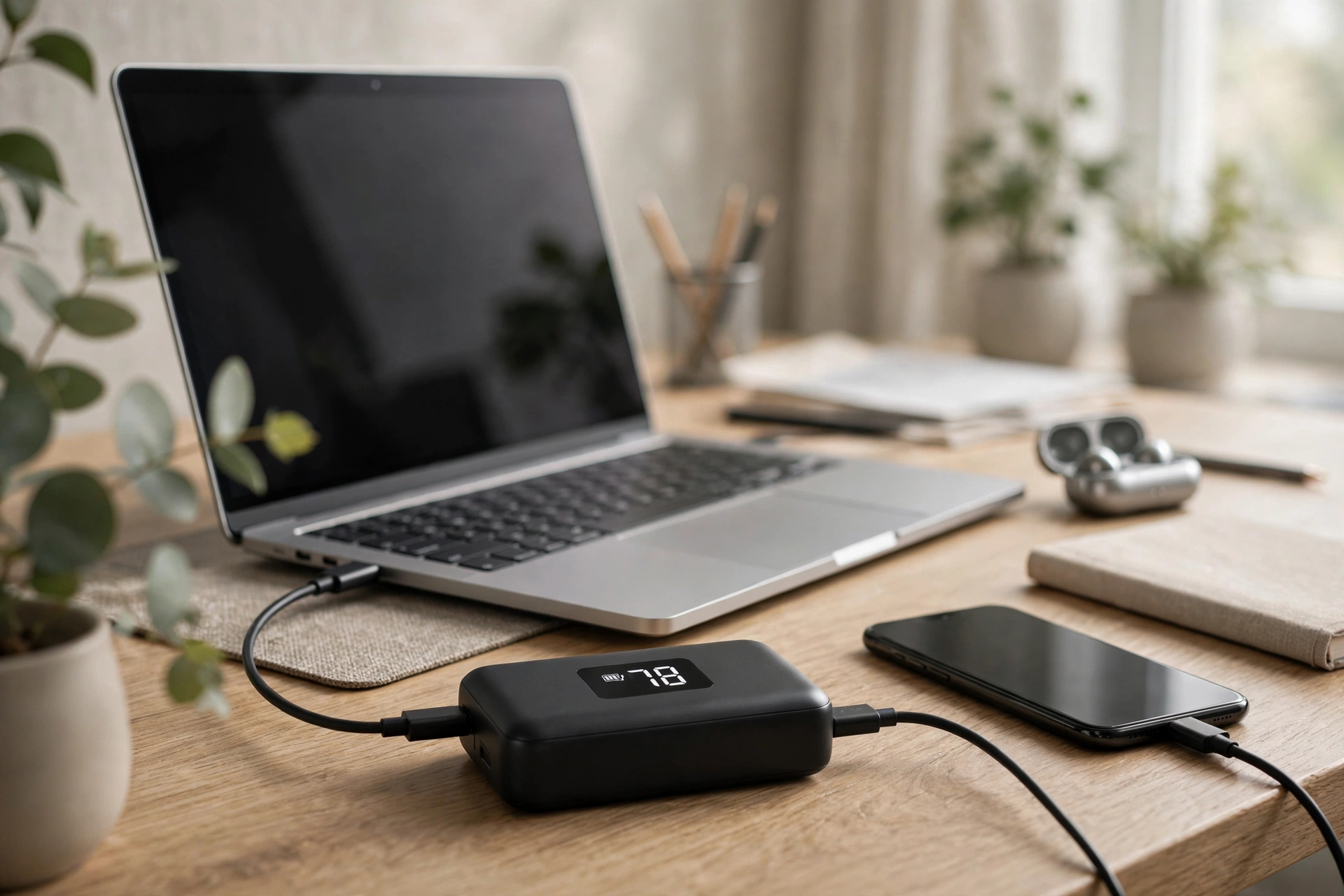
Price: about $89.99 | Capacity: 10,000mAh | Charging: dual USB-C up to 60W USB-C PD, plus USB-A | Display: shows battery status, output and thermal monitoring
The bigger BoostSolid sibling trades the magnetic trick for proper wattage: up to 60W over USB-C PD is enough to charge a laptop, a tablet and a phone alike. The built-in display reporting battery status, output and thermal monitoring is a genuinely useful touch — you can see what is actually happening instead of guessing from four blinking dots. It pairs naturally with a phone that sips power efficiently; see our best budget phones under $300 if you are kitting out on a budget. Check price on Amazon
Who it is for: anyone who wants one power bank for phone, tablet and laptop.
3. BMX SolidSafe Air 5K — best value thin magnetic
Price: about $59.99 | Capacity: 5,000mAh | Charging: Qi2 magnetic wireless | Cells: SolidSafe semi-solid-state (first shown at CES 2026)
Singapore’s Better Mobile Xperience undercuts Belkin by ten dollars with the SolidSafe Air 5K, which it claims is the world’s thinnest semi-solid-state Qi2 magnetic power bank. It is available on Amazon US, and it has the one thing the Belkin Slim lacks so far: an independent review. Macworld tested it in October 2026 and came away positive, particularly impressed in iPhone recharging tests. At this price, it is the easiest way to try the new cell tech. Check price on Amazon

4. Elecom DE-A07-10000 — the longevity champion (Malaysia only)
Price: about RM199 | Capacity: 10,000mAh | Charging: 35W combined USB-C output with PPS, two USB-C + one USB-A | Extras: pass-through charging, low-current mode | Lifespan: ~2,000 cycles (JIS C 8711) | Operating range: -15 to 45°C
Elecom’s take on semi-solid-state is less about thinness and more about endurance: roughly 2,000 charge cycles — about four times a standard lithium-ion bank — plus pass-through charging (charge the bank and your phone at once) and a low-current mode for earbuds and wearables. The catch is availability: it launched in Malaysia in September 2026 and is sold through Shopee and Lazada Malaysia only, so most readers will have to admire it from afar. Check price on Amazon
Who it is for: buyers in Malaysia who want a power bank that could last the better part of a decade.
5. One to watch: fully solid-state power banks
Price: n/a | Availability: not shipping yet
This is not a buy recommendation — it is a watchlist entry. The industry’s endgame is fully solid-state cells with no liquid electrolyte at all, promising even greater safety and energy density, but they remain largely in labs and prototypes. Semi-solid-state is the bridge technology shipping today, and the first brands to cross it well will likely lead the fully solid-state wave too. If you are not in a hurry, the 2027 ranges will be worth waiting for. See what’s available on Amazon
Who it is for: patient early adopters happy to let the tech mature one more generation.
How to choose a semi solid state power bank
Capacity: 5,000mAh covers roughly one full phone charge — fine for daily top-ups. 10,000mAh doubles that and starts to make sense for travel or tablets. For the full conventional landscape, our best power banks 2026 guide compares capacities across dozens of models.
Wattage: 15W Qi2 wireless is convenient but slow; 35–60W wired USB-C PD actually charges laptops. Match the wattage to the hungriest device you own.
Qi2 magnetic vs wired: magnetic wireless is the grab-and-go option for phones, but wired is faster and more efficient. The Belkin 10K gives you both worlds; the slim models are wireless-first.
Cycle count: this is the spec that justifies the premium. If a manufacturer quotes 2,000 cycles, that bank should outlast three or four conventional ones — factor that into the price.
Flying: semi-solid-state cells are still lithium-based, so standard airline rules apply: pack power banks in carry-on luggage only, never in checked bags, and stay under 100Wh. All five picks here are far under that limit, so they are flight-safe.

And remember: the greenest power bank is the one you keep. A bigger battery helps on the road, but daily habits matter more — see how to make your phone battery last longer for the other half of the equation.
Semi solid state power bank FAQ
Is semi-solid-state the same as solid-state?
No. Semi-solid-state adds a gel-like layer to the liquid electrolyte of a conventional lithium-ion cell — a halfway house. Fully solid-state batteries replace the liquid electrolyte entirely, and they are still mostly at the lab and prototype stage. Semi-solid-state is the version you can actually buy in 2026.
Are semi-solid-state power banks worth the premium?
If you keep a power bank for years or carry one daily, yes: the safety margin and the far longer cycle life (up to ~2,000 cycles versus ~500 for standard lithium-ion) change the long-term value. If you buy cheap banks and replace them yearly anyway, a conventional model remains the cheaper play.
Can I fly with a semi-solid-state power bank?
Yes. They are still lithium-based, so normal airline battery rules apply: carry-on only, never in checked luggage, and under 100Wh per battery. Every pick in this roundup is far under that limit.
The bottom line
Semi-solid-state is the first meaningful chemistry upgrade portable charging has seen in a decade — safer, longer-lived and thinner than the lithium-ion banks we have all been carrying. The Belkin BoostSolid pair leads on design, the BMX SolidSafe Air 5K leads on value (and has the independent review to prove it), and Elecom’s DE-A07-10000 shows where the longevity story goes. Prices are approximate as of October 2026, and the field will only get busier through 2027 — but if you are buying a power bank today that you want to keep, a semi solid state power bank is the smart money.