
Table of Contents
- Why Laptop Prices Are Rising in 2026
- How Much More Could You Pay?
- Who Gets Hit Hardest
- The Case for Buying a Laptop Now
- The Case for Waiting
- What to Buy Now: 3 Smart Picks
- How to Save Money Whatever You Decide
- What Do Analysts Predict Beyond 2026?
- Laptop Price FAQs
Should you buy a laptop now or wait? It is the question every laptop shopper is asking in 2026 — and this year, the answer matters more than usual. Memory and CPU costs are surging, analysts warn mainstream laptop prices could climb 30-40%, and manufacturers have already confirmed price hikes. Waiting, for once, looks like the expensive option.
In this guide, we break down why laptop prices are rising in 2026, how much more you could end up paying, and the situations where buying now beats waiting — plus three solid picks to buy before prices climb further.
Why Laptop Prices Are Rising in 2026
Three forces are squeezing laptop prices at once, and they all trace back to the same culprit: AI demand.
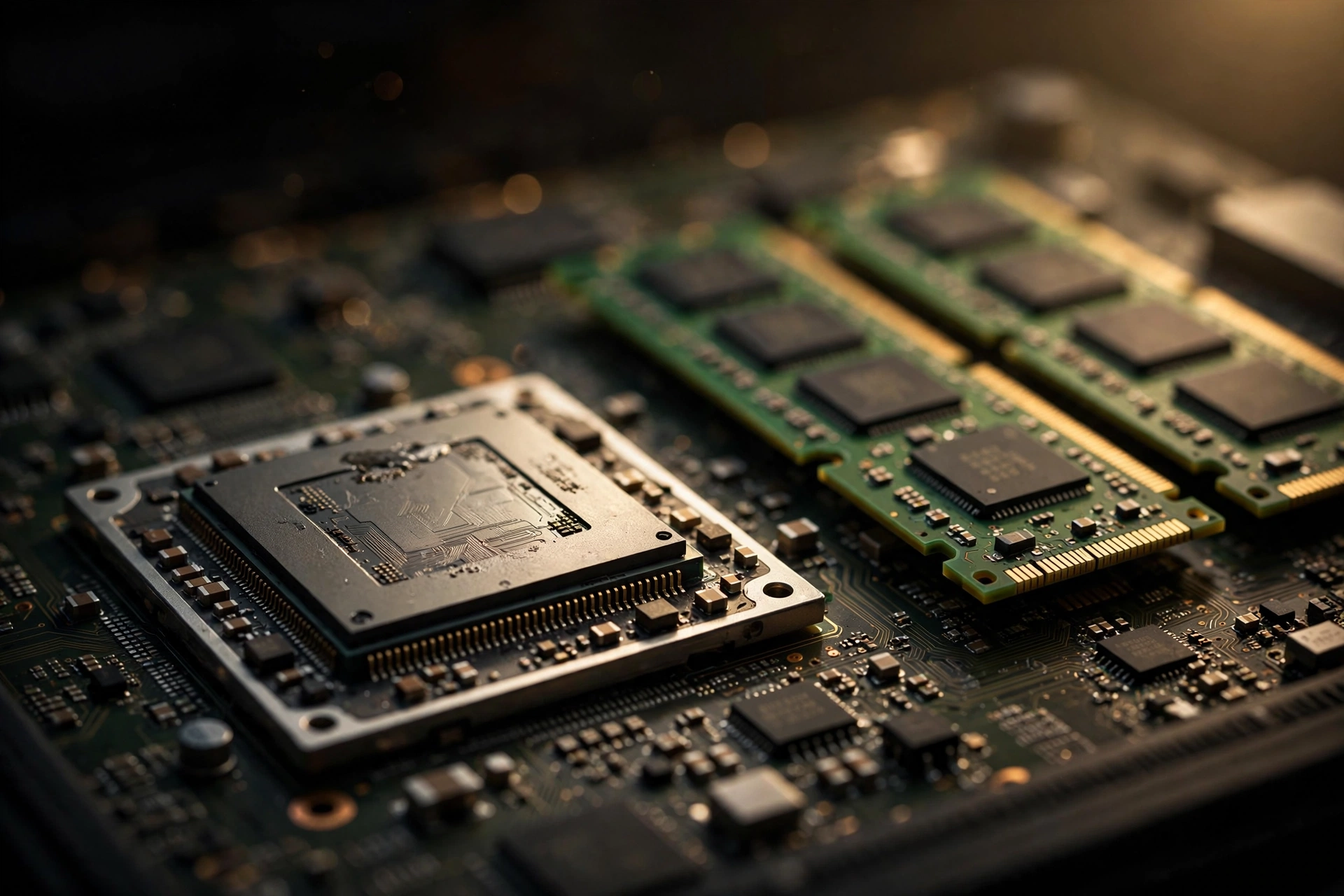
1. The memory crisis. DRAM and NAND flash prices have shot up as AI data centres buy enormous quantities of memory. TrendForce reports that memory, which normally accounts for around 15% of a laptop’s bill of materials, could exceed 30% — with some analysts noting RAM prices up 2.5 to 3 times. One memory CEO even warned of DRAM and NAND shortages lasting until 2030.
2. CPU price hikes. Intel has already raised prices on entry-level and older-generation laptop processors by more than 15%, with further increases planned for mainstream and mid-to-high-end platforms. Because the processor is already one of the biggest chunks of a laptop’s cost, rising CPU and memory prices together could push their combined share from about 45% to nearly 58% of total component costs.
3. Supply prioritisation. With cutting-edge manufacturing capacity booked out by AI and data-centre orders, fewer chips are left for consumer laptops. Smaller brands are hit hardest — tier-one brands like Lenovo, Dell and HP can lean on long-term supply deals, while smaller vendors pay inflated prices or face shortages.
How Much More Could You Pay?
The numbers are stark. TrendForce modelled a mainstream laptop with a $900 MSRP and found memory and CPU inflation alone could force the retail price above $1,200 — a rise of more than 30% — just for manufacturers to hold their margins. Other estimates range from 30% to 45% depending on brand and configuration, with high-end gaming laptops potentially climbing up to 30%.
Some of this has already landed: analysts report laptop and desktop prices are already up around 10-12%, with another 8-10% expected in the coming months. Apple, which designs its own silicon and is partly insulated from Intel’s pricing, still raised MacBook Pro prices by $300 to $500 earlier this year — a sign that even the best-positioned brands cannot fully absorb the memory crunch. For the full analyst picture, see PCWorld’s breakdown and Windows Report’s coverage of the TrendForce data.

Who Gets Hit Hardest
Not every buyer feels this equally:
- Budget buyers suffer most. Entry-level CPUs saw the first and steepest hikes, and manufacturers are quietly trimming configurations to hold price points — shipping 16GB of RAM where 32GB was standard, or 512GB SSDs where 1TB used to be the norm. You pay the same and get less.
- Chromebook shoppers face a shrinking market: Omdia predicts a 28% decline in low-cost devices like Chromebooks as margins evaporate.
- RAM-heavy users (video editors, developers, anyone wanting 16GB+) are the most exposed to further DDR5-driven hikes.
- Apple buyers are relatively sheltered on the CPU side thanks to Apple silicon — the $599 MacBook Neo with the A18 Pro chip is arguably the best value in laptops right now — but Macs are not immune to memory market pressure either.
The Case for Buying a Laptop Now
For most people who need a laptop within the next six months, buying now is the lower-risk move. The logic is simple: laptops sitting in retail inventory today were manufactured — and priced — before the latest round of component hikes. As that stock sells through, replacement units arrive carrying the new costs. Analysts do not project meaningful price relief before late 2027 at the earliest.
Buying now also locks in better specifications at today’s prices, dodging the spec erosion described above. If your current machine is limping along, every month you wait risks paying more for less laptop. Our guide to speeding up a slow laptop can buy you a few months if you are on the fence — but if the machine is truly done, do not wait.
The Case for Waiting
Waiting still makes sense in a few specific situations:
- You are eyeing a specific next-generation model (new Core Ultra or RTX 50-series machines) where launch pricing or festival deals could beat today’s prices.
- Your need is 12+ months out and your current laptop works fine — you lose nothing by monitoring the market.
- You are a light user (browsing, documents, streaming) who can grab a discounted older model during a sale event rather than paying new-stock prices.
Just do not wait expecting a return to 2024 prices. Analysts are clear that is not on the horizon.

What to Buy Now: 3 Smart Picks
If you have decided to buy a laptop now, these are the value plays worth grabbing before the next round of hikes. Prices change fast in this market — check the live price before buying.
1. Apple MacBook Air (M4) — the safe harbour. Apple’s own silicon insulates it from Intel’s CPU hikes, and the Air remains the best blend of performance, battery life and build for most people. Check the price on Amazon.
2. Lenovo IdeaPad Slim 3 — the budget play. Budget Windows laptops are the category facing the steepest incoming hikes, so locking in a well-reviewed budget machine now saves the most in percentage terms. Check the price on Amazon.
3. ASUS Vivobook 15 — the all-rounder. A strong mid-range pick with the specs (16GB RAM, 512GB SSD) that are getting quietly trimmed elsewhere — buy the configuration you actually want while it still exists. Check the price on Amazon.
For convertible options, see our best 2-in-1 laptops of 2026 roundup.
How to Save Money Whatever You Decide
- Prioritise RAM at purchase. Memory is the component inflating fastest, and most thin laptops cannot be upgraded later. 16GB is the sensible minimum in 2026.
- Consider previous-generation models. Last year’s machines at clearance prices dodge most of the component inflation.
- Time sale events. Festival and holiday sales with bank-card discounts can still beat the trend — but compare against pre-hike baselines, not inflated “was” prices.
- Do not overbuy. A mid-range machine that covers your actual needs beats an expensive one whose premium mostly reflects component inflation.
What Do Analysts Predict Beyond 2026?
Looking further ahead, the picture is cautiously mixed rather than bleak. Omdia expects global PC shipments to fall around 12% to 245 million units in 2026 as higher prices suppress demand — with the consumer segment bearing the brunt. IDC and Counterpoint similarly see volumes declining 7-8% in 2026 after a record 2025.
On supply, there are two camps. Optimists point to new semiconductor capacity coming online and the possibility that AI demand moderates, which could ease memory prices in late 2027. Pessimists note that AI firms have already locked in storage and memory supply through 2027 and into 2028, and one memory CEO has warned of shortages persisting until 2030. The consensus view: partial relief is possible in late 2027, but nobody credible expects prices to return to 2024 levels.
The practical takeaway stays the same. If you need a laptop in the next year, the market is very unlikely to reward your patience — buy at today’s prices, buy the RAM you will need for the machine’s whole life, and treat any future price drop as a bonus rather than a plan.
Laptop Price FAQs
Should I buy a laptop now or wait in 2026?
If you need one within six months, buy now. Prices are projected to rise another 8-10%+ with no relief expected before late 2027, and waiting risks paying more for reduced specifications.
Why are laptop prices going up in 2026?
AI data-centre demand has driven DRAM/NAND memory prices up sharply, Intel has raised CPU prices 15%+, and manufacturers are passing costs to buyers. Memory and CPU together could reach ~58% of a laptop’s component cost.
How much will laptop prices increase?
Estimates range from 30% to 45% on affected models (TrendForce, IDC, Counterpoint). A $900 laptop could reach $1,200+; high-end gaming laptops could climb up to 30%.
Will laptop prices drop in 2027?
Possibly, but only partially and only if AI demand moderates or new chip capacity comes online. No analyst expects a return to 2024 pricing.


1 response